
UI/UX design for software and web apps, by the people who build it.
Screens, user flows and design systems for the products people use every day at work. From Palermo, across Italy.
«L'interfaccia intuitiva rende facile l'inserimento di nuovi ordini e il monitoraggio dei tavoli.»
Sound familiar?
And what staying this way costs you, every day.
Users get lost in your app and ask you how to do something simple.
Someone on your team answers every question, in person or on the phone. The time the software was meant to save goes into explaining it.
The management software works, but your team avoids it and keeps using Excel.
You paid for software nobody uses. And the real data stays in one person's spreadsheets, outside the system.
You have a design your developers say they can't build.
You pay for the screens twice: once to design them, once to make them fit. And what goes live isn't what you approved.
What we design
Product interfaces
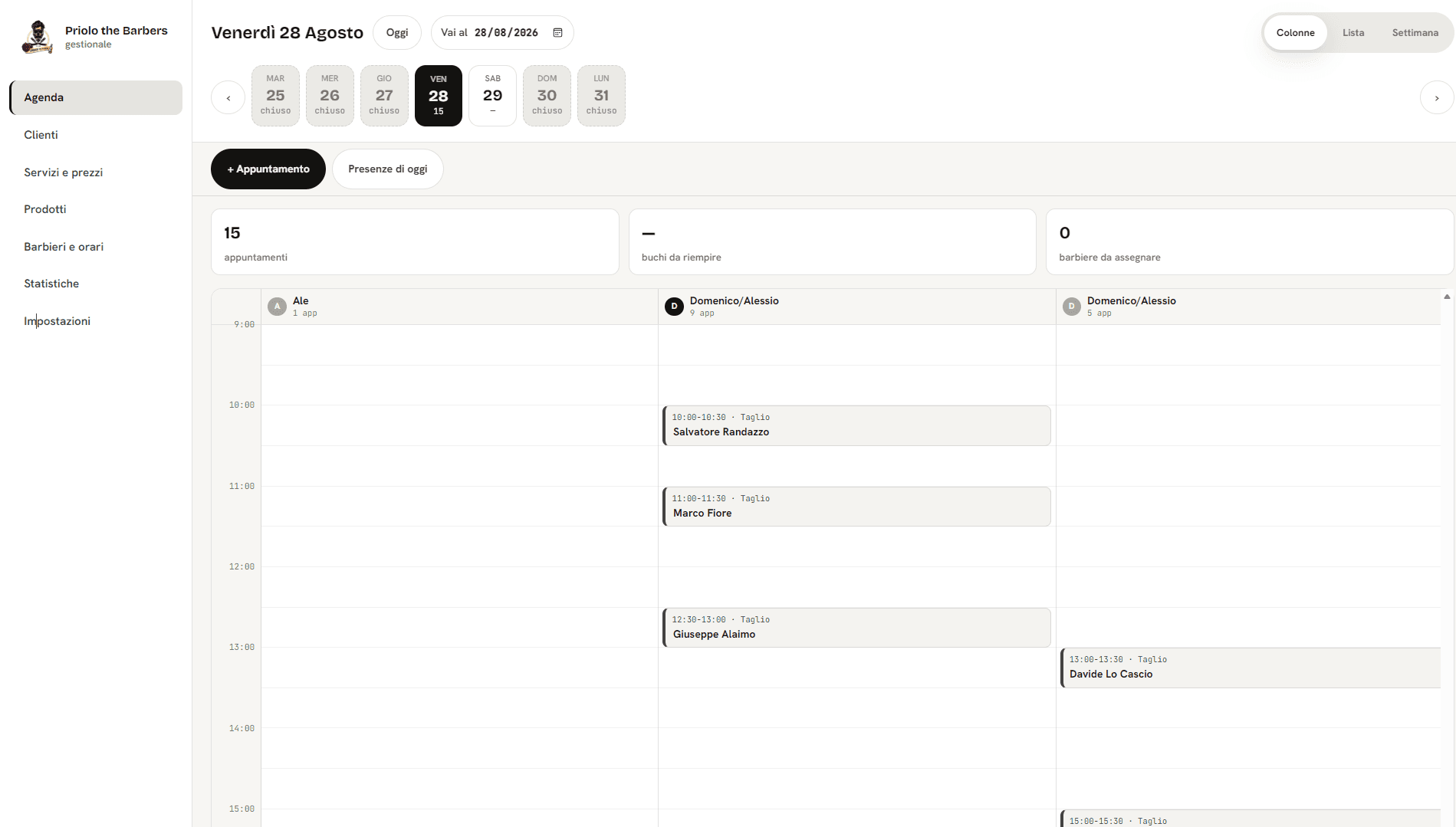
Your product's screens, including the ones nobody usually designs: empty states, errors, dense tables, role-based permissions.
Design systems
Colours, type and components defined once and reused everywhere, so the product stays consistent as it grows.
Also
Clickable prototypes
Tested with the people who'll use it.
User flows
Fewer steps, fewer drop-offs.
Accessibility
Contrast, keyboard, targets: from the start.
Responsive
Office and phone, neither an afterthought.
Interfaces in use every day
«Uno strumento straordinario che ha migliorato l'esperienza di gestione degli ordini dentro il locale. L'interfaccia intuitiva rende facile l'inserimento di nuovi ordini e il monitoraggio dei tavoli.»
Fabio Greco
Founder, META Gaming Pub
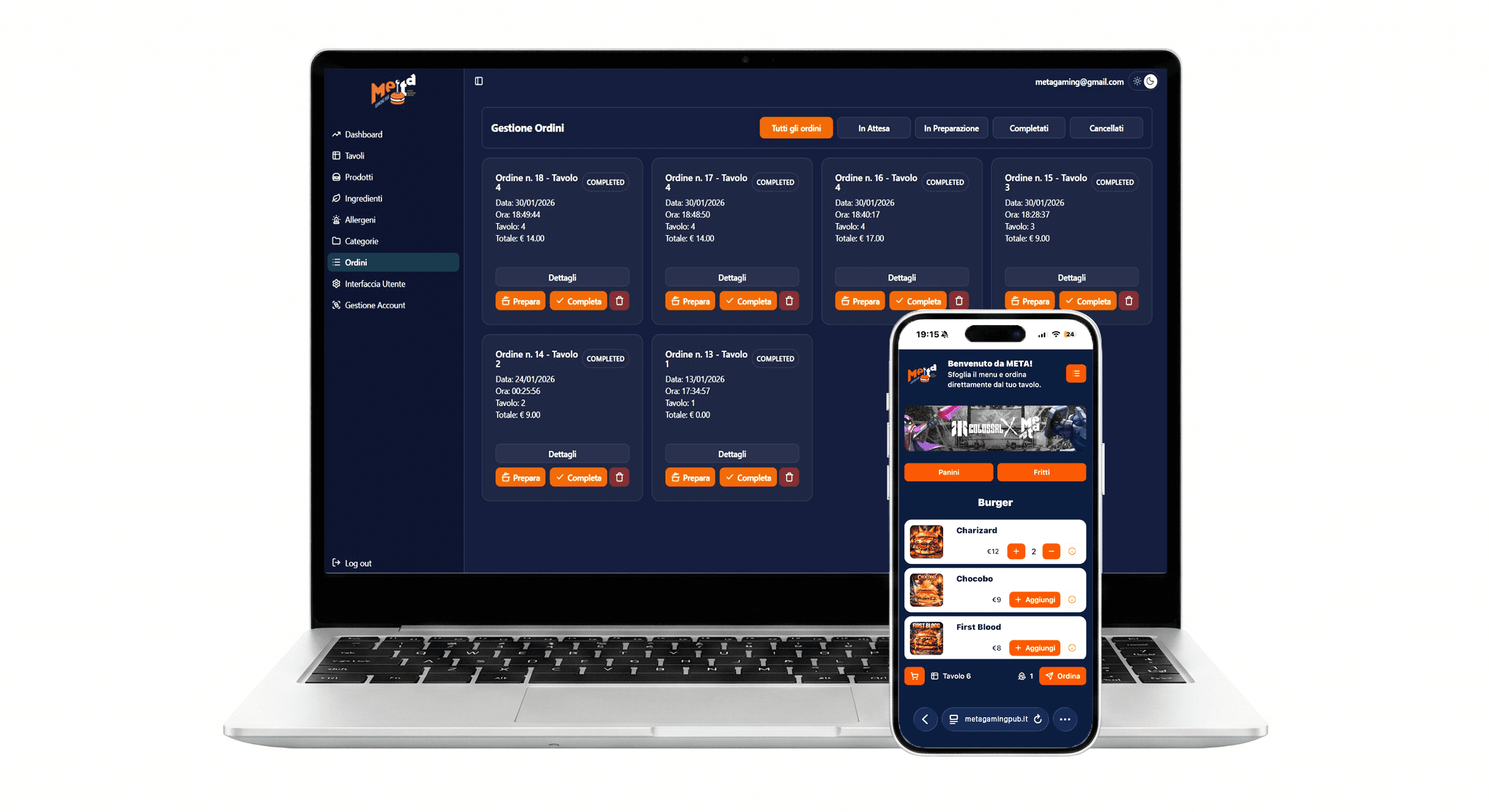
Digital menu and table ordering for a gaming pub
Why not a template, or a designer?
They're fair choices, and sometimes they're enough. Here's what changes on the four things we're asked about most.
| What matters | Bought template | Designer who doesn't code | M's Works |
|---|---|---|---|
| The screens | The ones the theme ships with. Your work adapts to them. | Made to measure. Errors, loading states and permissions sometimes get left out. | All of them, including the ones nobody draws: errors, empty states, role permissions. |
| Can it be built? | Yes, within the theme's limits. | You find out when it reaches the developers. | It's drawn by the people who build it: the prototype is what goes live. |
| When the product grows | Every extra piece is a plugin, or a compromise. | Every new screen goes back to whoever designed the first ones. | Components and rules are already in place: the new screen matches the rest. |
| Who answers after handover | The theme's support, for whatever it covers. | The designer for the design, someone else for the code. | A team of four people who also look after maintenance. |
The screens
M's Works: All of them, including the ones nobody draws: errors, empty states, role permissions.
Bought template: The ones the theme ships with. Your work adapts to them.
Designer who doesn't code: Made to measure. Errors, loading states and permissions sometimes get left out.
Can it be built?
M's Works: It's drawn by the people who build it: the prototype is what goes live.
Bought template: Yes, within the theme's limits.
Designer who doesn't code: You find out when it reaches the developers.
When the product grows
M's Works: Components and rules are already in place: the new screen matches the rest.
Bought template: Every extra piece is a plugin, or a compromise.
Designer who doesn't code: Every new screen goes back to whoever designed the first ones.
Who answers after handover
M's Works: A team of four people who also look after maintenance.
Bought template: The theme's support, for whatever it covers.
Designer who doesn't code: The designer for the design, someone else for the code.
The first step is a free analysis.
Show us the screens that cause the most trouble, even if the software is already live. We'll tell you where people get lost and what we'd change first.
- A reply within 24 hours.
- A look at the screens you send us, even from software already in use.
- Where people get lost, and what we'd change first.
- A written proposal, with phases, timelines and a quote.
- No commitment. If the problem isn't the design, we'll tell you.
- 01Understand the workWho'll use the product, to do what, and how many times a day.
- 02FlowsFlows and screen structure in black and white: the part that's expensive to change later.
- 03Interface and systemThe finished screens and the components that hold them together, with your feedback each round.
- 04HandoverSource files, components and usage rules.
you have software people use every day at work, and they struggle with it. You want screens that can actually be built, and that stay consistent as the product grows.
you're after a logo, a brand mark or a visual identity. That isn't our work, and we'll tell you straight away.
Before starting, people ask us
“What if it can't be built?”
It's designed by the people who build it: what you see in the prototype is what ships.
We designed and built Compensi ourselves, for people coming from years of Excel. Review happens in a grid that works like a spreadsheet, and the month closes in 2-3 hours, reviews included.
The case study →“The software is already in use.”
We work on what you have too, without stopping it or starting over.
“How do I see it first?”
With a clickable prototype, tried by the people who'll use it before it becomes code.
We start this way on our own products too. The Animatio site began as an animated draft approved before any code, for desktop and phone, and it was built without drifting from it.
The case study →What people ask us
No. We design product interfaces. Logos, brand marks, naming and tone of voice aren't our services: if that's what you need, we'll tell you straight away.
Yes, without stopping it and without starting over: we begin with the screens that cause the most trouble.
Source files, components and usage rules. If we also build it, there's no handover: we just carry on.
Is your product hard to use?
Show us the screens that cause the most trouble, even if the software is already live. We'll tell you where users get lost and what we'd change first.